

Age of the artistic representations: From the Late Neolithic to the early Bronze Age.
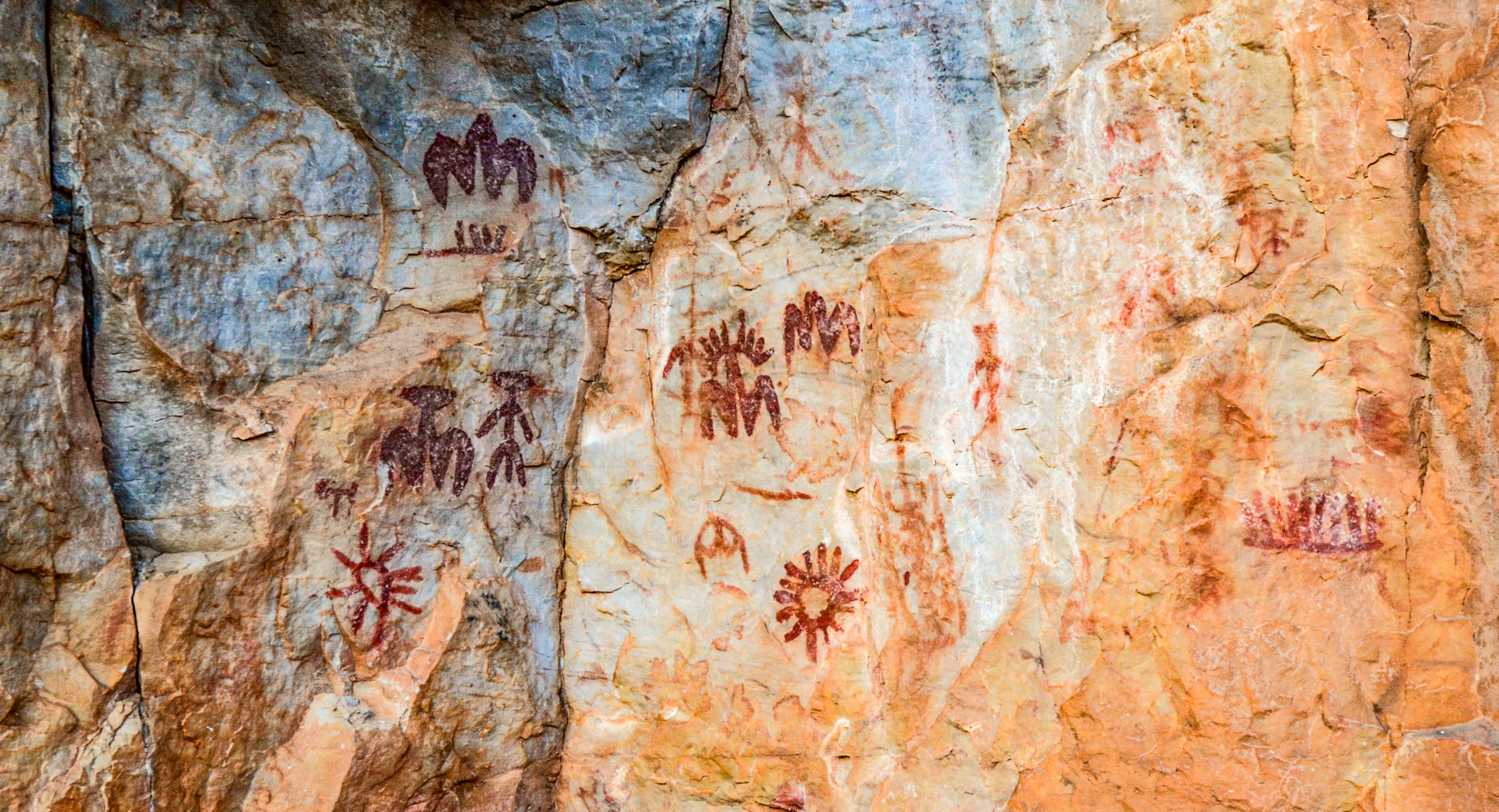
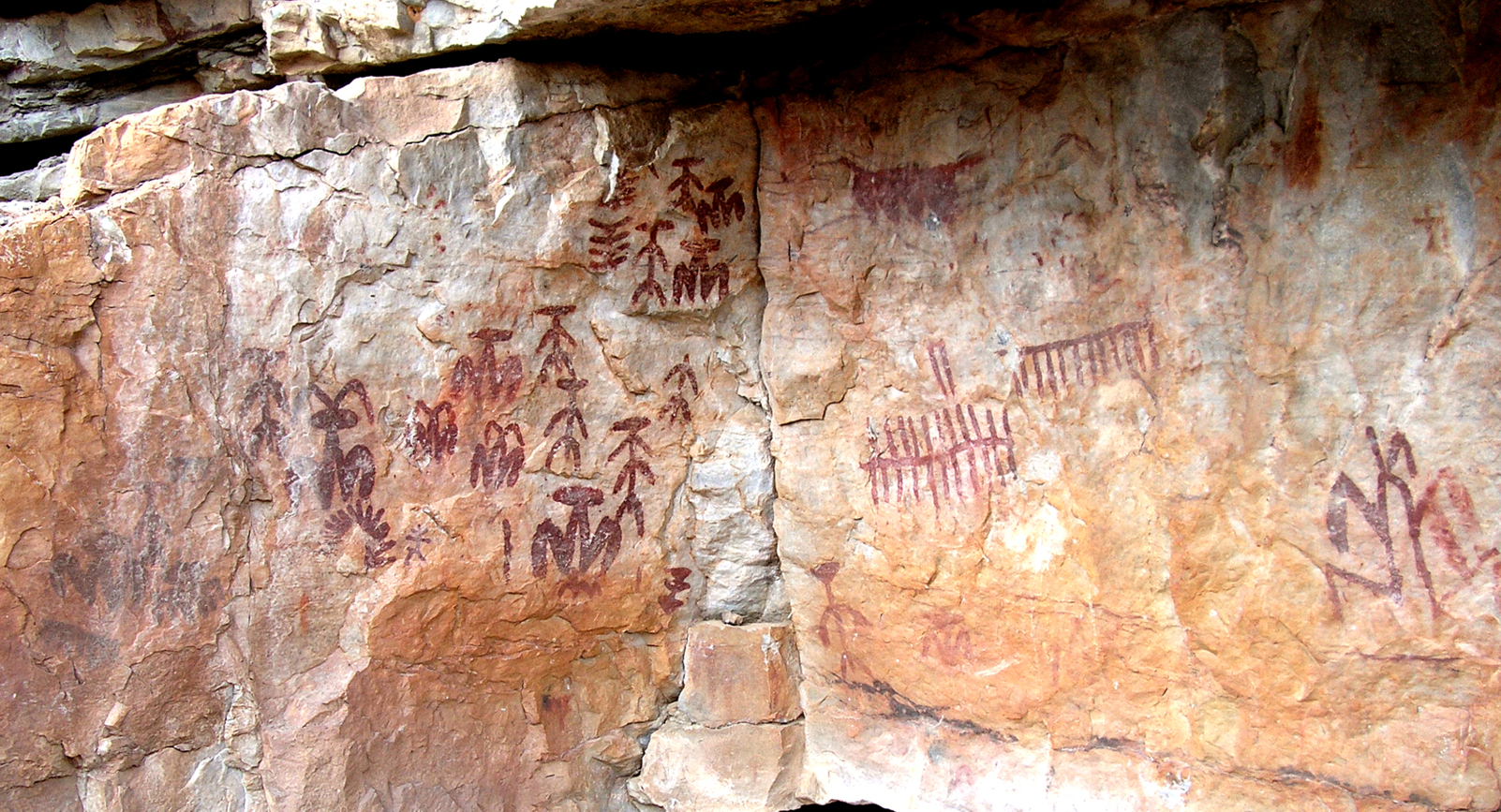
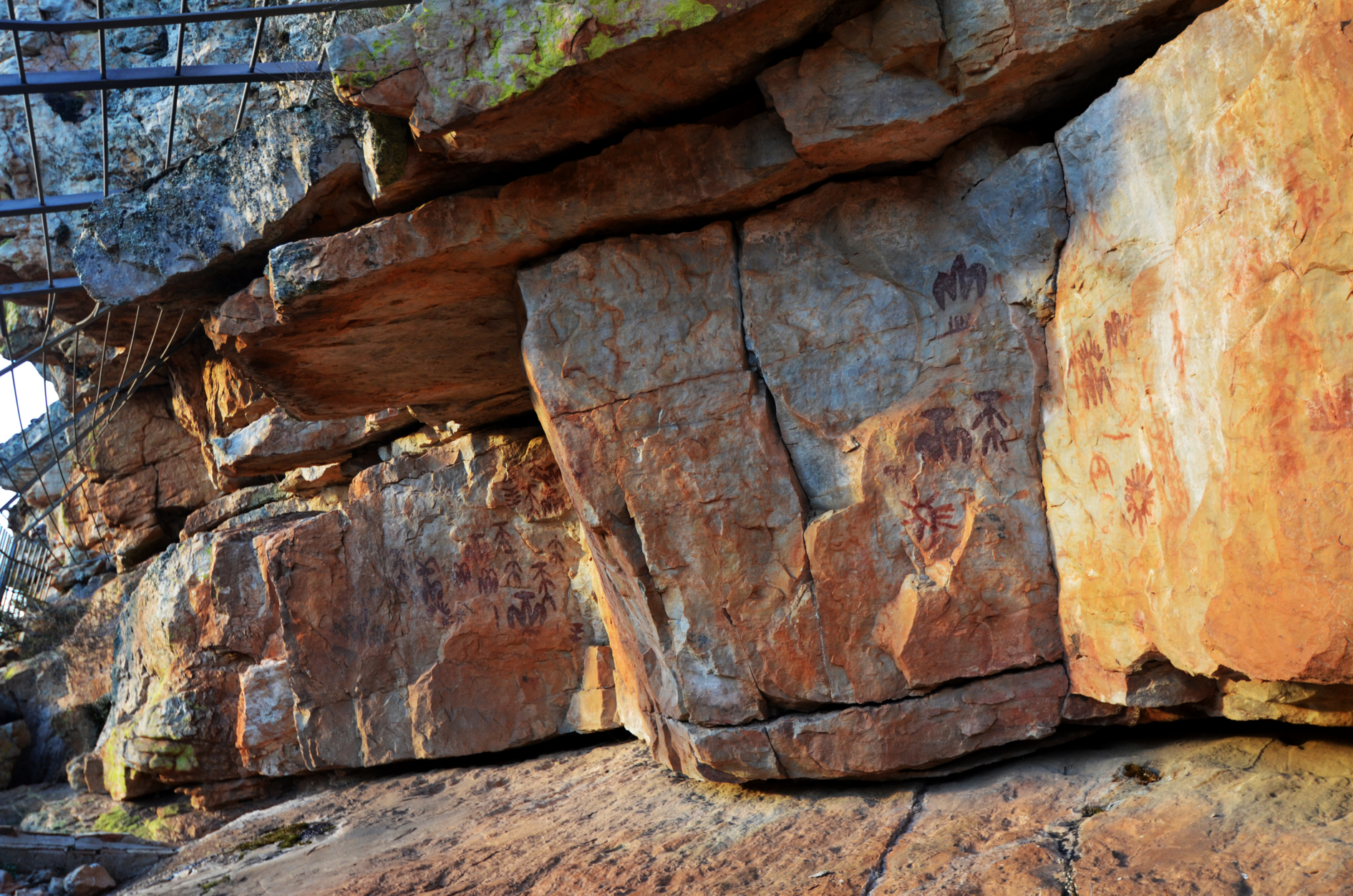
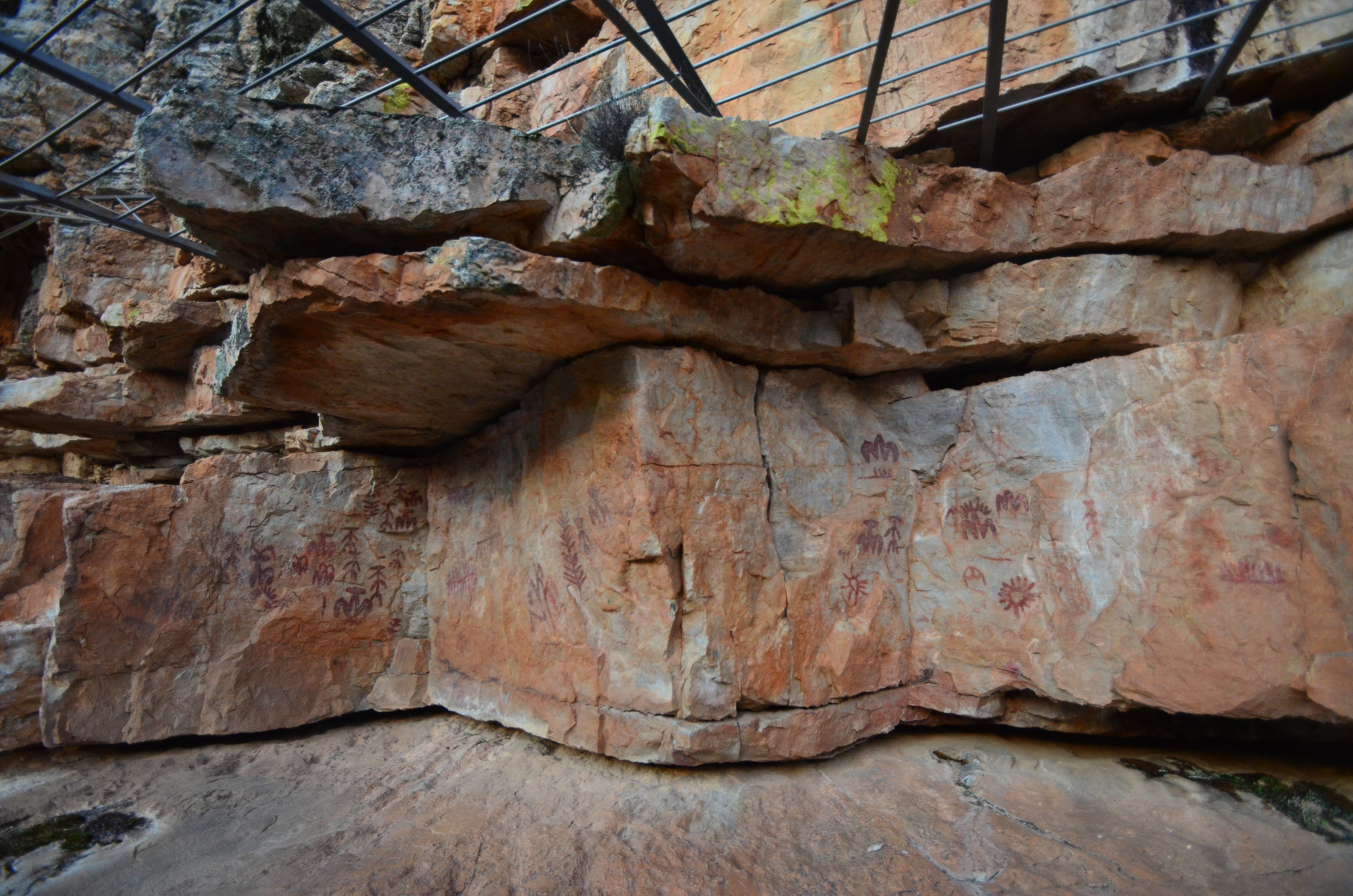
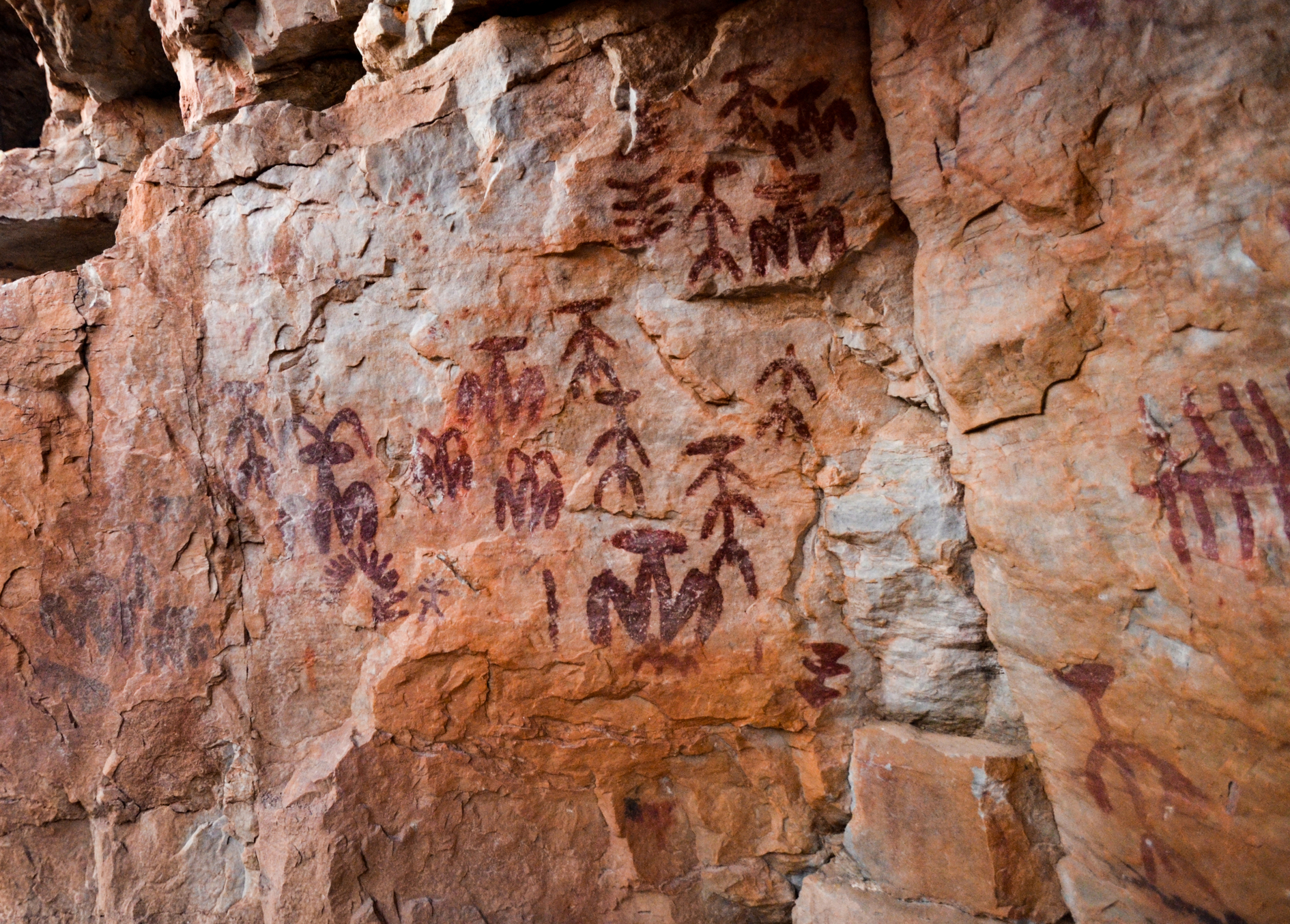
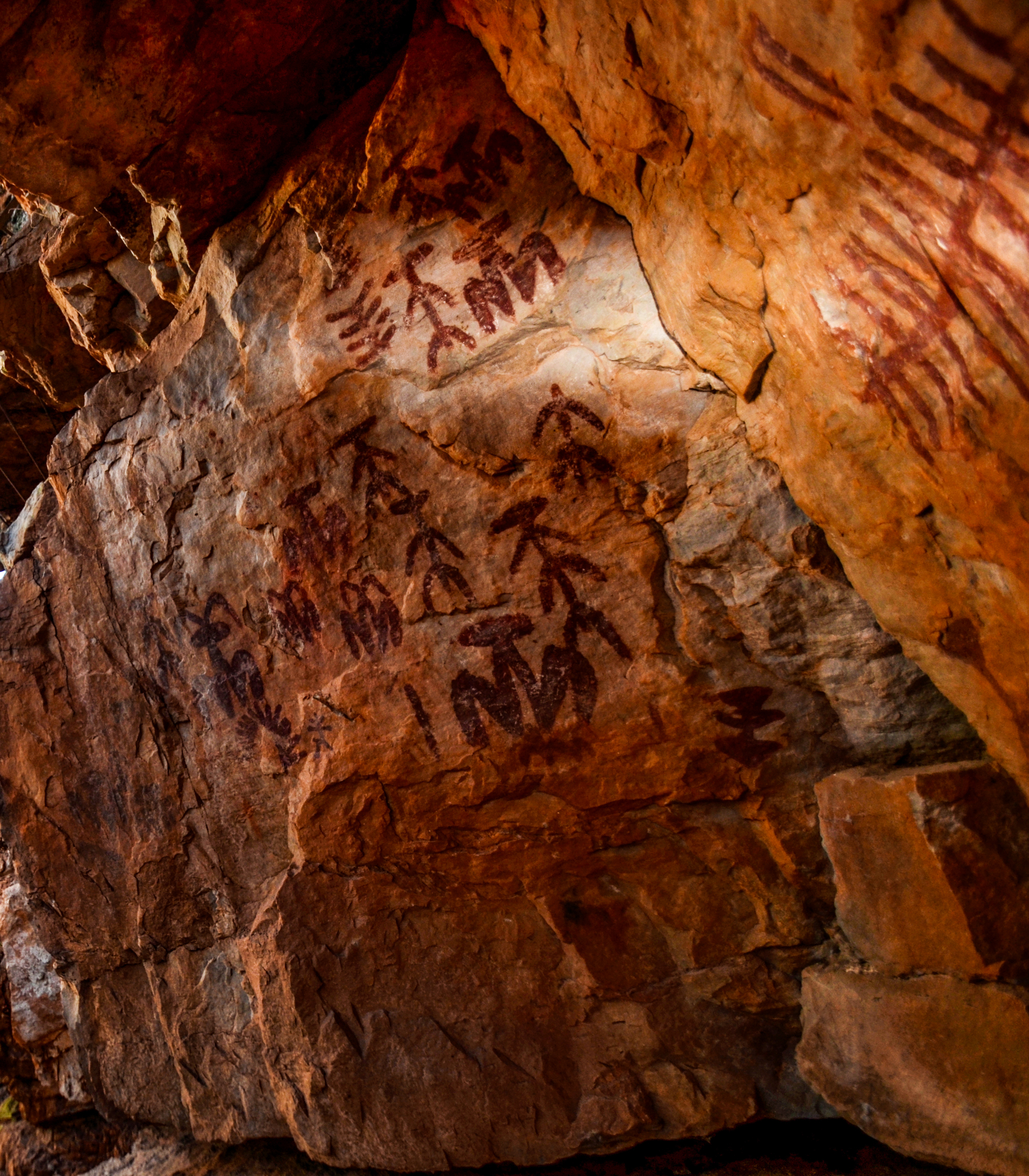
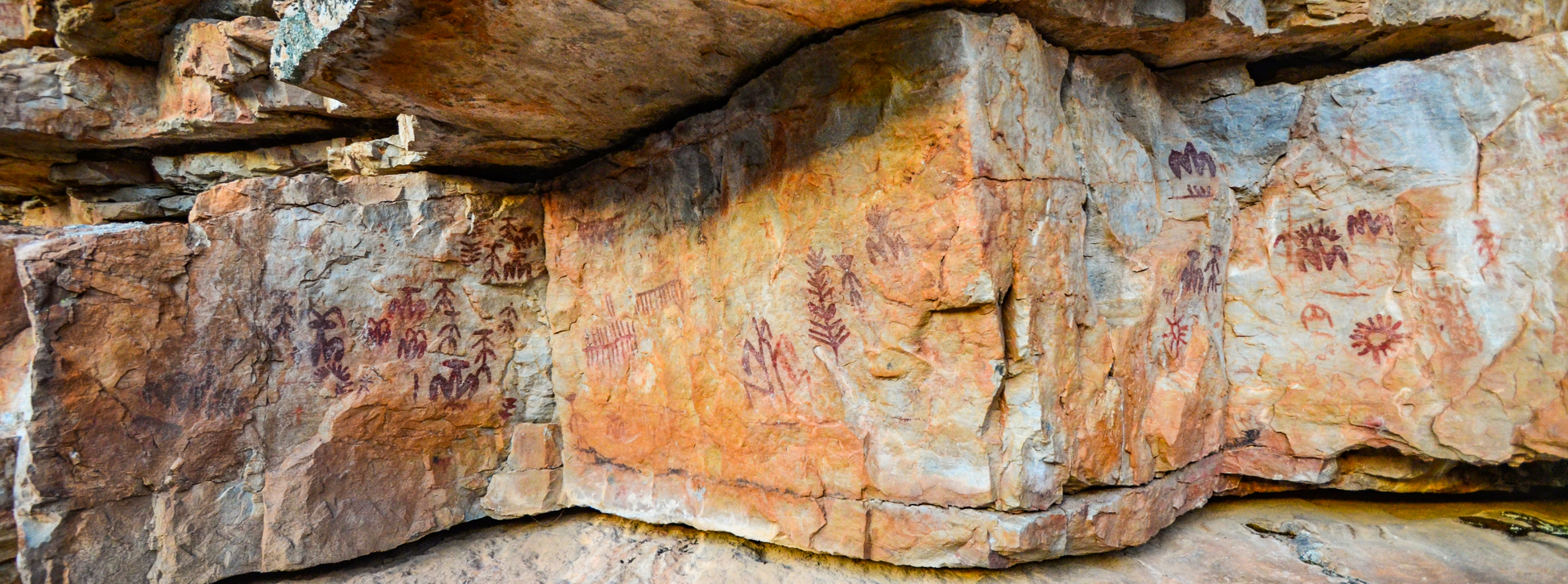
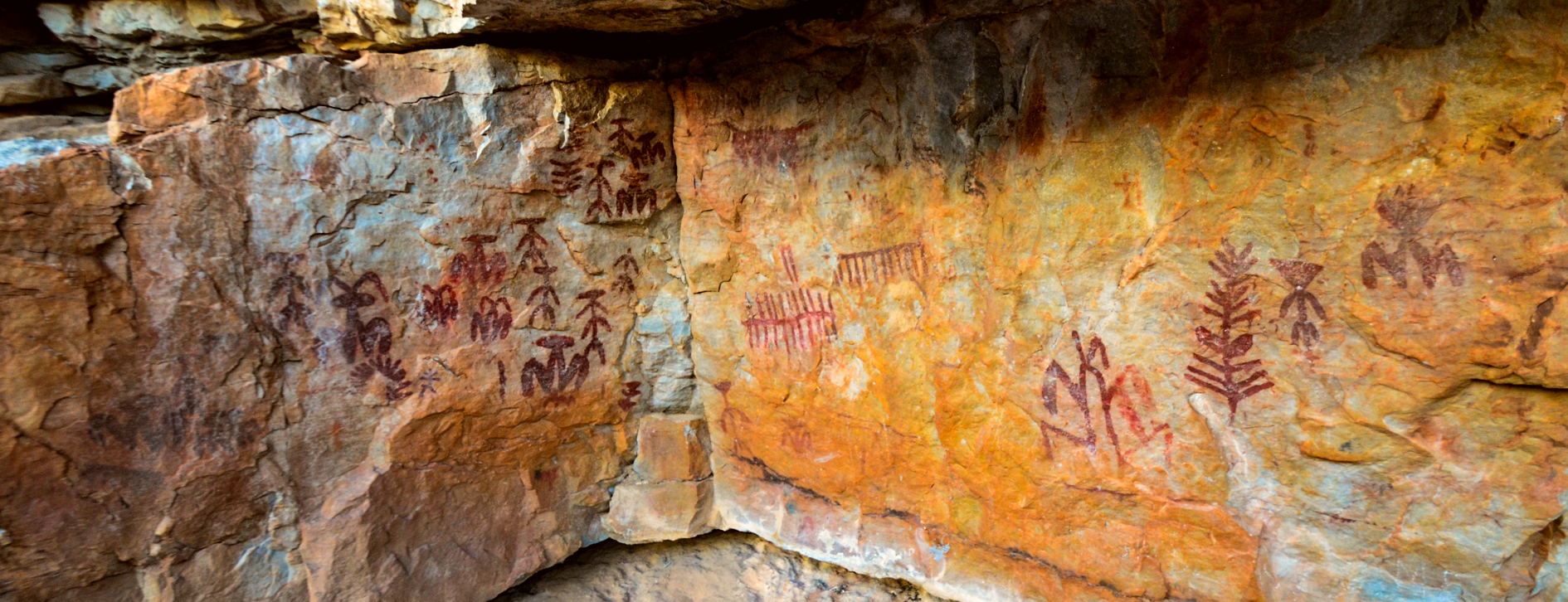
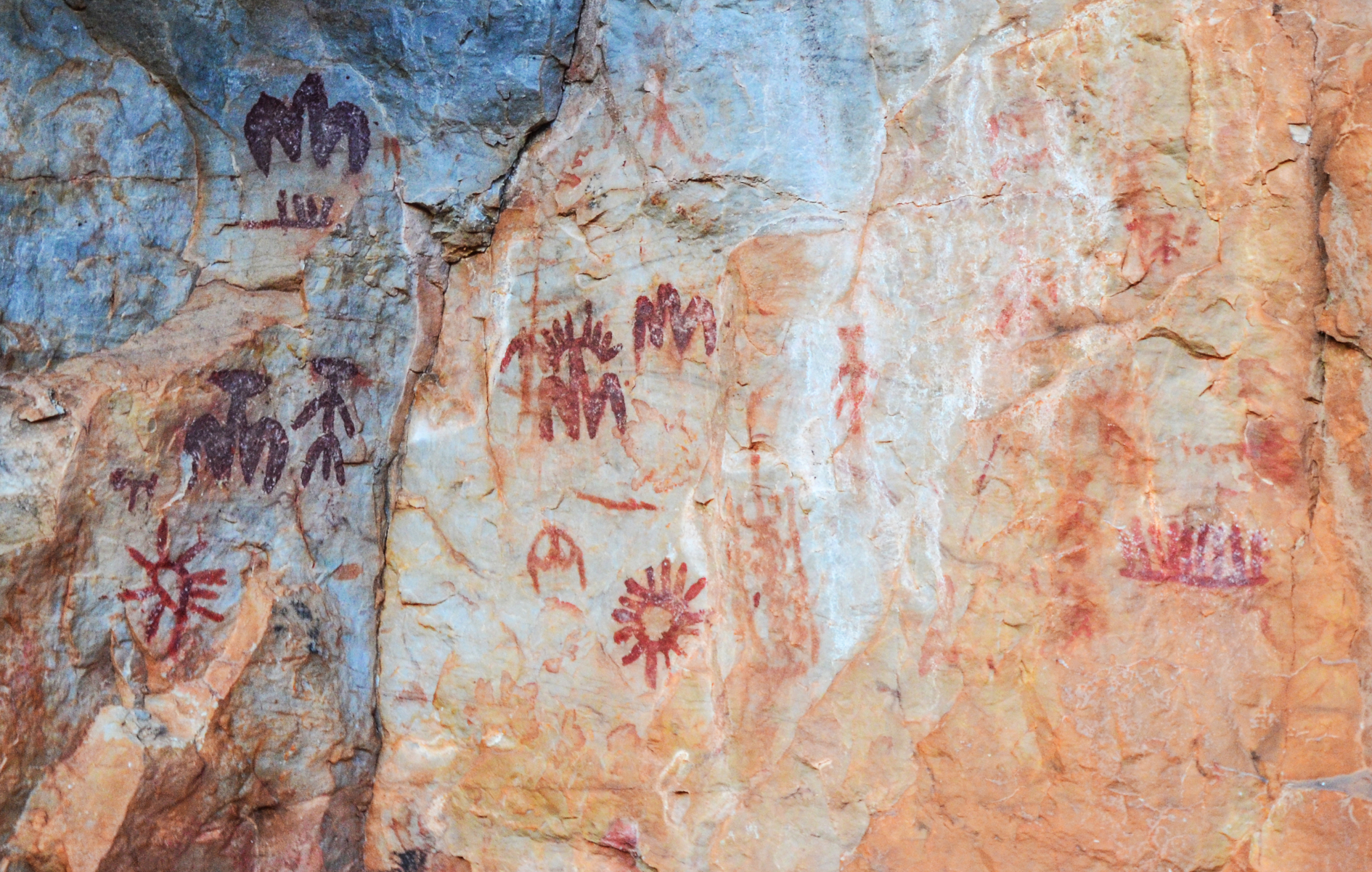
General description of the destination: The Peña Escrita rock shelter stands out for three reasons: the abundance of rock art, its spectacular mountain setting and the excellent state of preservation of the paintings. Dating back between 7,500 and 4,000 years, from the Neolithic and Chalcolithic periods, they belong to societies that marked the beginning of agriculture, the domestication of animals and the first use of metals, such as copper. With 104 figures painted on the rock, it is one of the most richly decorated rock shelters in the entire Iberian Peninsula. The vividness of its pigments, still vibrant today, makes a visit a unique sensory experience for enjoying prehistoric art. Situated halfway up the slope, on a large quartzite rock face, the rock shelter forms a natural balcony reminiscent of a theatre stage. From here, the entire surrounding area is visible: Fuencaliente, El Piruetanal, La Serrezuela and the Peña Escrita stream, which runs along the valley floor. Today, a path has been laid out to access the rock shelter, but in the past it was an almost inaccessible place, a refuge for mountain goats and other wild species. The rock shelter faces south-west and is 21.60 metres wide. Its back is formed by vertical rock walls that advance and retreat in a zigzag pattern, creating smooth friezes between 1.30 and 4.50 metres wide. The figures are distributed across eight panels: five are situated in the central part of the rocky zigzag, two in the upper left section of the rock shelter, and one more on a loose stone block to the right. All the paintings are reddish in colour, created using mineral pigments of iron oxide mixed with animal fat. They were applied using fingers or rudimentary brushes. The most frequently depicted motif consists of highly stylised human figures, although forms of branches, suns, animals and comb-like symbols also appear. The female figures are particularly intriguing: they are depicted as the letter ‘M’ with a central indentation symbolising the vagina. Above this is drawn an oval head or horizontal line, sometimes adorned with a hairstyle or headdress. Among the animal representations – the so-called zoomorphs – quadrupeds with heads and, in some cases, tails stand out. There are also numerous comb-shaped figures, known as tectiforms, consisting of several parallel vertical lines crossed by a horizontal one. Their interpretation varies: they have been seen as enclosures, animals, counting systems, amongst others. Finally, we find ramiform motifs, that is, branch-shaped, possibly inspired by plant elements.
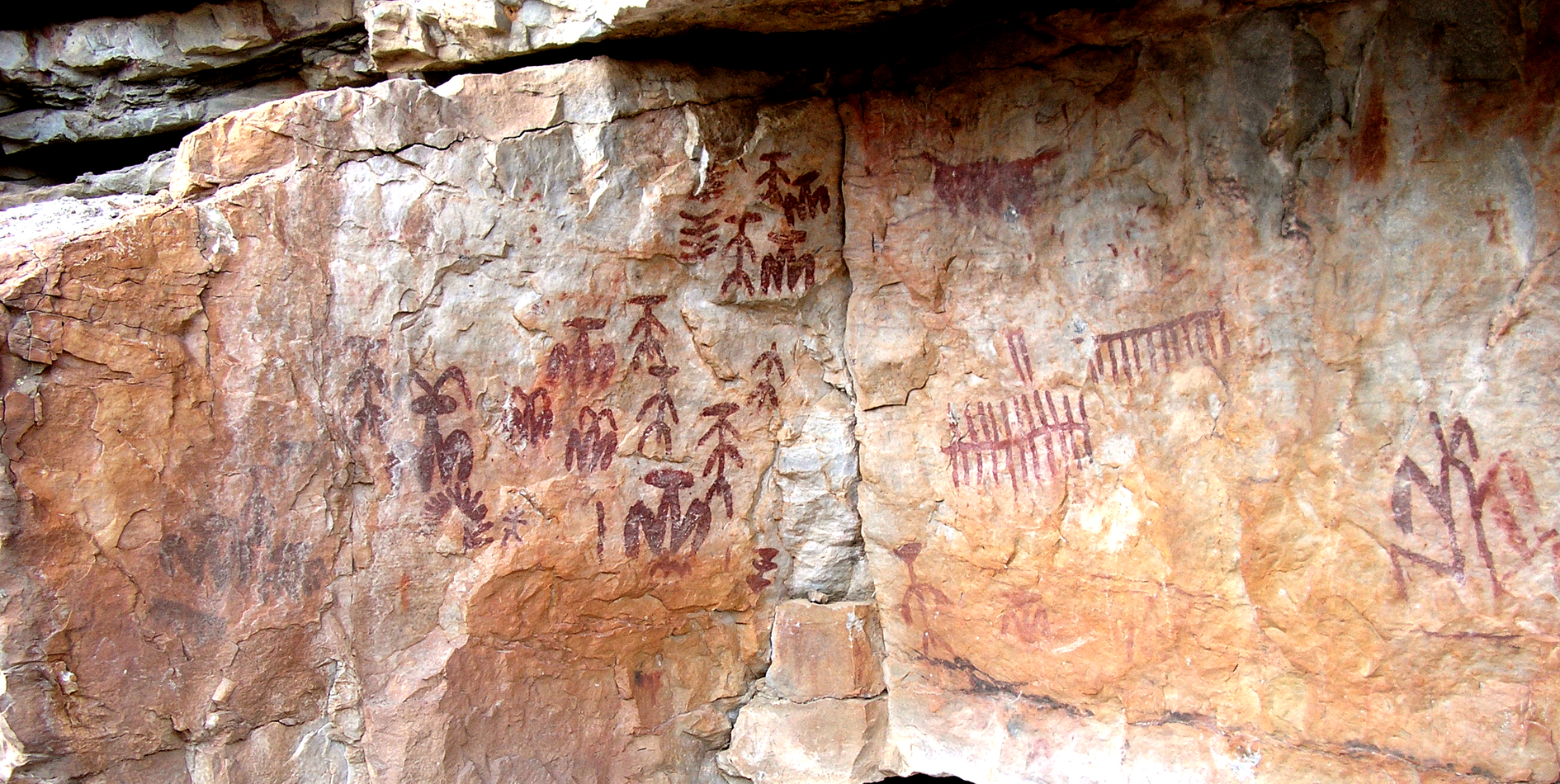
The La Batanera rock shelter stands out for its proximity to water and its spectacular setting of waterfalls. All this suggests that it may have had a mystical significance, which is why the paintings were created on its walls. However, the beauty of the site contrasts with the fragile state of preservation of these works. Humidity, water seepage into the rock and the proximity to water have progressively deteriorated the pigments and encouraged the proliferation of lichens. Furthermore, small fragments of the rock surface have broken away, taking part of the paintings with them. Added to this is the difficulty in distinguishing the paintings due to the reddish and yellowish tones of the rock, which blend in with the original red. Some figures are only visible in high humidity, such as on rainy days or when the rock is wet. Vandalism has also left its mark: there is graffiti on the main panel and, in the 18th century, one of the rocks was removed and taken to the Royal Cabinet of Natural History in Madrid. La Batanera comprises three panels, separated by a few metres, protected by railings and all facing the stream. The first panel is situated in a shelter some 3 metres high and is the one with the greatest number of figures and the best-preserved ones. Panels 2 and 3 follow along the wall, although they have fewer figures. All the paintings are reddish in colour, made with mineral iron oxide pigments mixed with animal fat. They were applied with the fingers or with rudimentary brushes. The most common motifs are human figures, depicted in the form of a double anchor—known as anchor-shaped anthropomorphs. Wavy lines—known as serpentine forms—and circles are also visible.
History of the site: The cave paintings at Fuencaliente hold the distinction of being the first prehistoric art discovered on the Iberian Peninsula. It was in 1783 that the parish priest of Montoro, Don Fernando López de Cárdenas, reported the existence of paintings at Peña Escrita and La Batanera. The priest was exploring the area on behalf of the Count of Floridablanca, a minister to King Charles III, who, upon receiving the news, sent an official report. At that time, the Royal Cabinet of Natural History had just been established in Madrid. To satisfy the count, the parish priest chipped away a stone bearing paintings from the La Batanera rock shelter and sent it to the cabinet for display. For decades, these paintings were forgotten, until they attracted attention once again in the mid-19th century. They were mentioned in the magazine *Semanario Pintoresco Español* and in Pascual Madoz’s *Diccionario de España*. At that time, it was believed they were the work of the Phoenicians, Egyptians, Celts or Iberians. The first scientific interpretation was provided by Manuel de Góngora in 1868, who included them in his work *Antigüedades Prehistóricas de Andalucía*. Years later, the renowned French archaeologist Henri Breuil visited the rock shelter in 1911, and the following year he returned with the equally distinguished archaeologist Hugo Obermaier. Both took advantage of the trip to study the rock art throughout the region. The most recent research has been carried out by Pilar Acosta, Alfonso Caballero Klink and Macarena Fernández.
Museographic resources description: Señalización y paneles didácticos en ambos refugios (Peña Escrita y La Batanera). Algunas ecorutas de la región conducen a estos lugares, y existen empresas con guías que ofrecen visitas especiales a los refugios (http://turismovalledealcudia.com/#!/catid=1;3;4;2).