
Age of the artistic representations: These rock art sites have been assigned a long chronology, due to the appearance of the weapons depicted and the similarities with motifs found in other parts of the Iberian Peninsula. Broadly speaking, this chronology spans from the Copper Age to the Roman period. More recently, this chronology has been narrowed, and most of the art is now attributed to the Iron Age and the period of Romanisation (between 2,500 and 1,800 years ago). The presence of swords and Roman-era writing at the Tesito de los Cuchillos allows the site to be dated with some precision to the 1st to 3rd centuries AD.
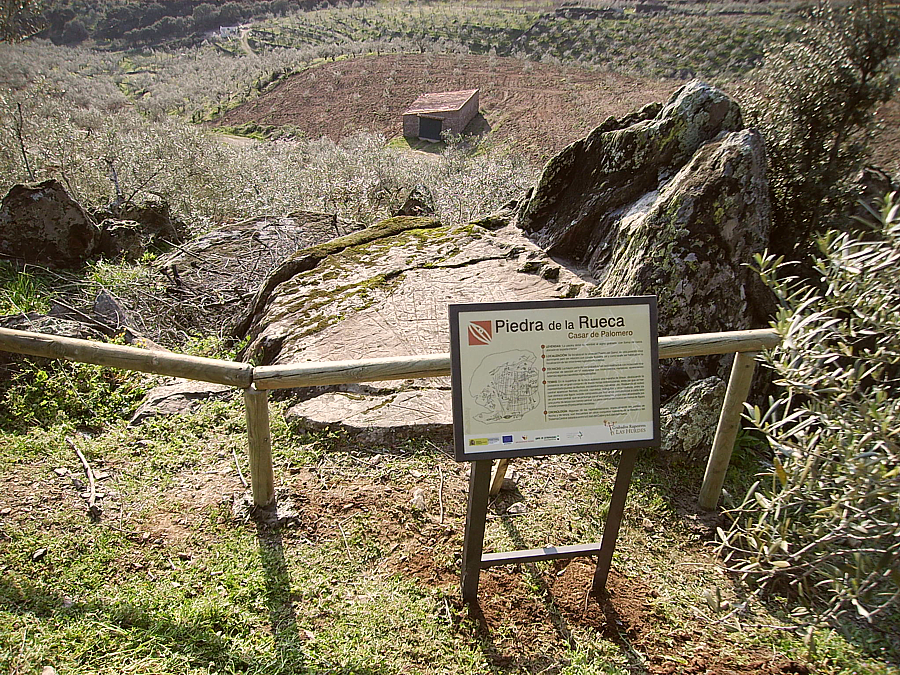
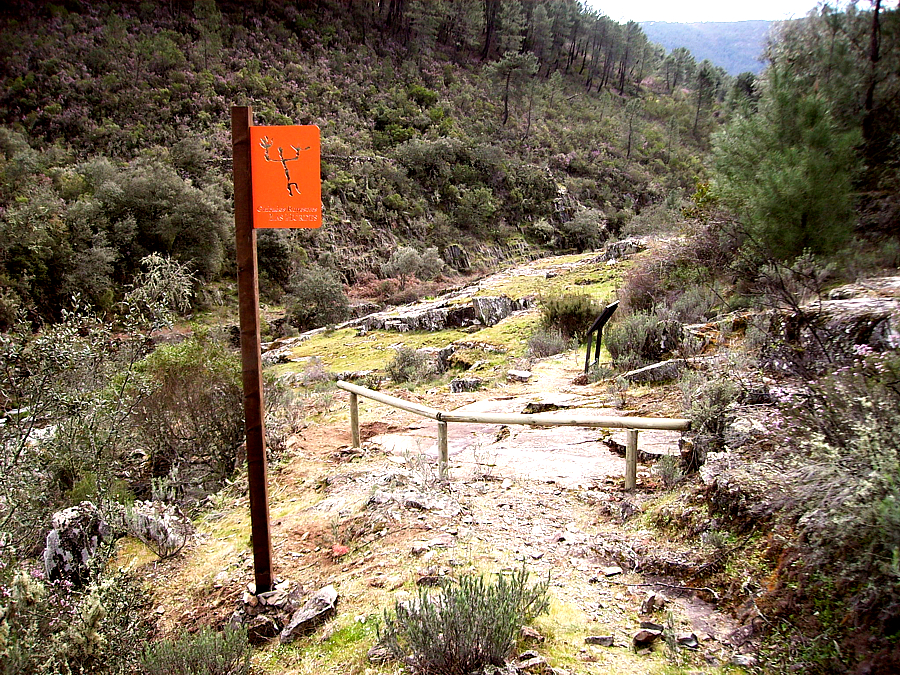
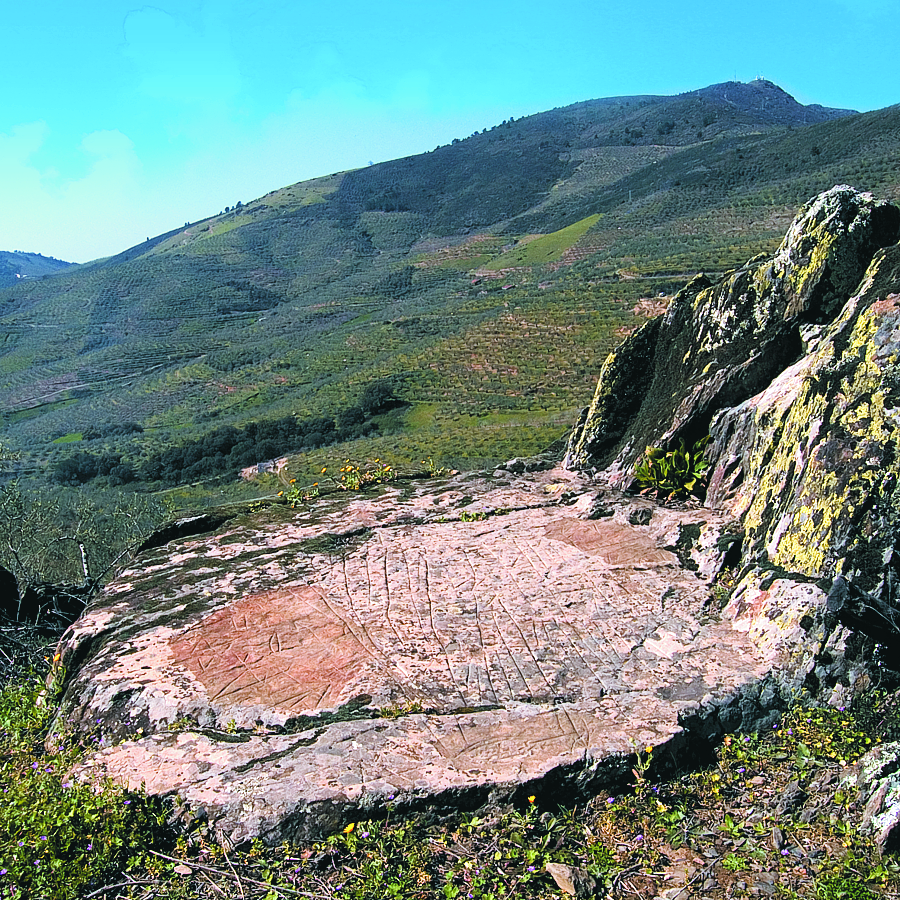
General description of the destination: The rock art of Las Hurdes is generally found on rocky outcrops situated halfway up a hillside overlooking a river or watercourse, often facing north-west or north-east. The motifs are usually found on the horizontal surface of the rock, at ground level, on outcrops of slate or schist. The engravings were produced using essentially two techniques: pecking and, above all, more or less deep incisions made with metal tools, leaving clearly marked V-shaped grooves. The engravings at Las Herraduras are found on several flat slabs surrounded by slabs or vertical rock outcrops that stand out in the landscape. The collection of engravings is divided into three groups, each located on a different rocky outcrop. The most frequent motif, and the one that gives the site its name, is the horseshoe, which appears accompanied by at least two human or anthropomorphic figures. Las Pimpollosas is a slate outcrop at ground level on which a wide variety of geometric motifs have been engraved: rectangles, squares, latticework, ladder-like shapes, dotted patterns and circles. Furthermore, different engraving techniques can be observed, ranging from deep grooves that appear older to fine, subtle lines suggesting a more recent creation.
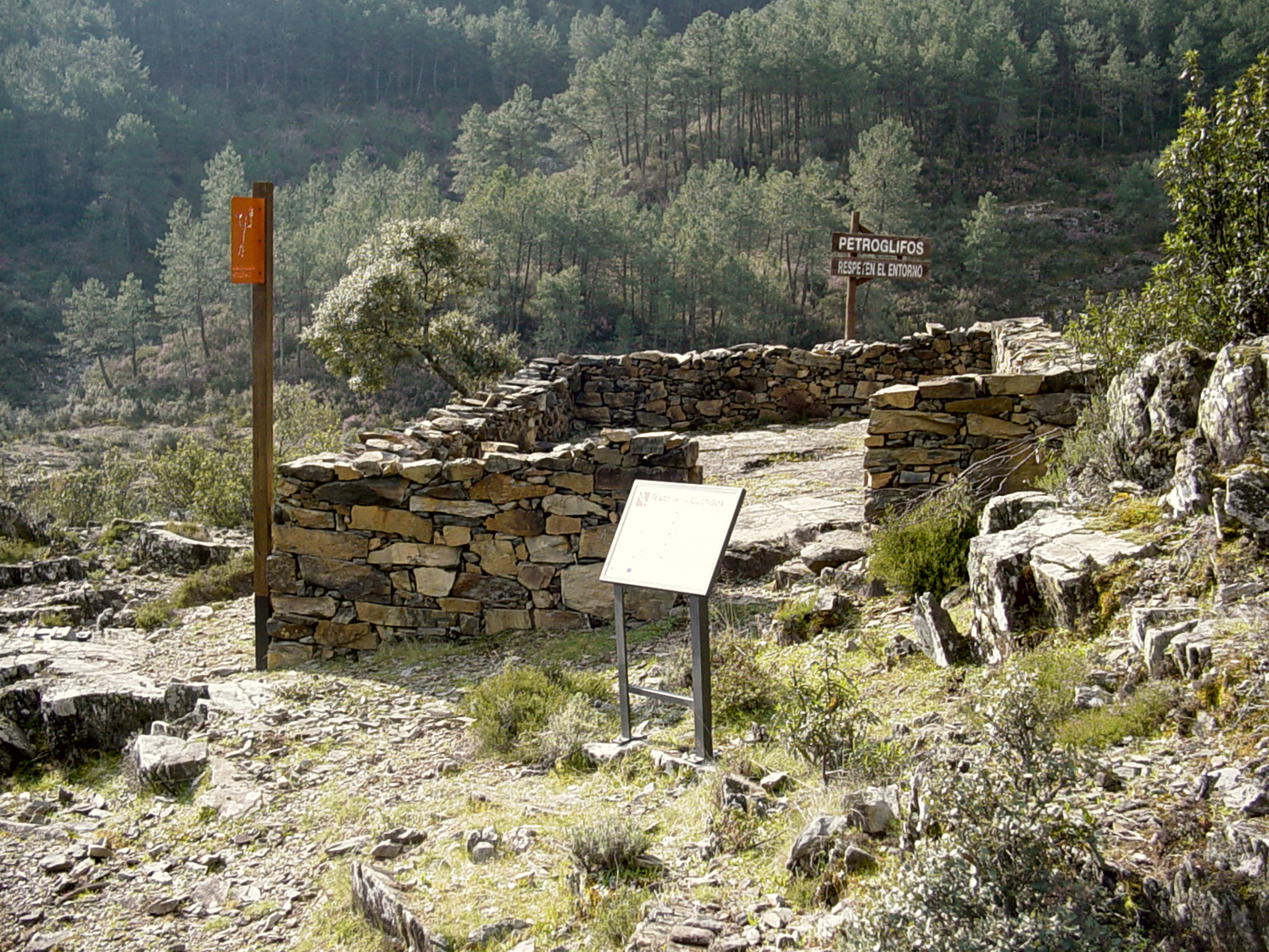
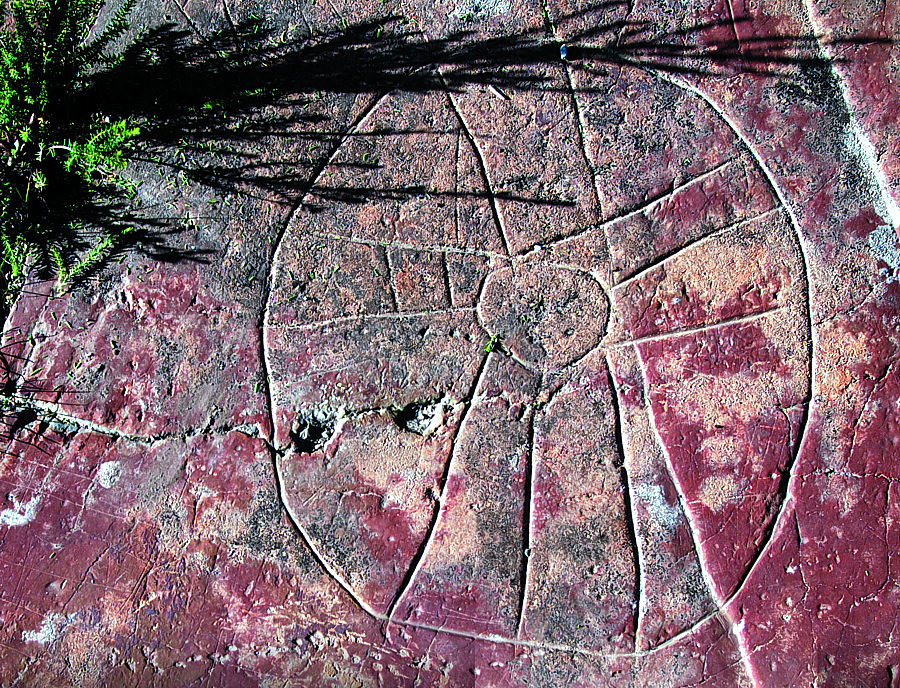
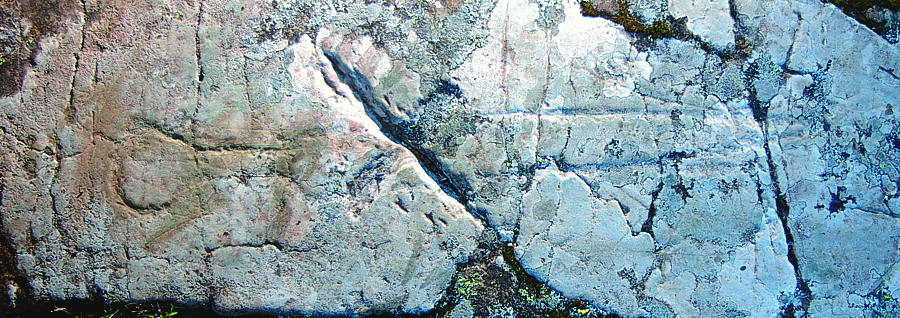
One of the most striking features is a large circle containing a smaller circle, joined by spokes. This motif, which is difficult to interpret, could represent anything from a solar symbol to a circular shield with its boss and crossbars. Its presence dominates the whole and immediately attracts attention. Over these ancient engravings are more recent ones, executed using a very fine engraving technique, among which stand out intersecting lines, ladder-like shapes, a possible anthropomorphic figure and some circular motifs. Furthermore, there are inscriptions in meticulous calligraphy, dating from the Modern Age, specifically the 15th century. Several alquerques—boards for playing noughts and crosses—are also preserved. These inscriptions, superimposed on the older engravings, show us how this place has been a point of interest over the centuries. At El Riscal we can see two horseshoes created using the pecking technique, small cup marks, triangular motifs, an interlacing of fine lines dotted with a sort of teardrop shape, and so on. Tesito de los Cuchillos is one of the most fascinating sets of engravings in Las Hurdes, both for its subject matter and its chronology. We are looking at a large stone slab, situated on a hillside overlooking two rivers, next to an old path. It is a well-known site for its depictions of Roman weaponry, such as daggers and swords, as well as an inscription alongside them. It is divided into several panels separated by empty spaces. Each panel has its own character, with motifs ranging from Roman weapons to shod feet (known as ‘podomorphs’), circles with spokes and a sickle. The weapons panel is the most striking. Engraved here are five swords which, by their shape and detail, can be identified as ‘gladius’, the characteristic weapon of the imperial Roman legionaries.
Next to the swords is a Latin inscription: RMAMIIACAVII, which can be translated in various ways: “beware of my weapons”, “fear my weapons” or “protect my weapons”. A Roman dagger, known as a “pugio”, also appears; together with the gladius, this formed part of a Roman soldier’s basic equipment. Furthermore, two spears can be distinguished. The depiction of weapons in the Hurdan petroglyphs is common. Furthermore, there is a panel of podomorphs, featuring up to thirty engravings of shod feet. These feet were engraved using two techniques: pecking and incision. Interestingly, some of the feet created using incision overlap other engravings. There is also a panel featuring concentric circles (some enclosing cup marks), a common motif in Atlantic rock art. Finally, it should be noted that the site is dotted with other motifs, such as stars, a sickle, a possible horseshoe, Roman numerals and more modern engravings. At Las Erías, the engravings are situated on a large smooth rock, located on the hillside next to an old cobbled path. There are no clear figurative representations, such as animals, people or objects, nor any well-defined geometric motifs; the engravings were made using the pecking technique. Despite this, two of the motifs have been interpreted suggestively, one as an idol and the other as a chariot. However, these interpretations are subjective and require a certain amount of imagination, as the engravings are not entirely clear.
History of the site: These rock carvings were discovered quite recently, in the mid-to-late 20th century. Tesito de los Cuchillos was discovered in 1953, when one of the engineers responsible for reforestation in Las Hurdes noticed the presence of a carving. Later, in 1956, some of them were studied by the researcher M. Sayans Castaños. It was not until the 1980s that the petroglyphs became the subject of a doctoral thesis, written by María del Carmen Sevillano San José. Subsequently, researchers such as Luis Benito del Rey, Saúl Martín González and Ramón Grande del Brio resumed their study of them.
Museographic resources description: The (rock)ART-POINTS APP features a video guide to the five sites in this rock art area: https://artpoints.prehistour.eu/points/22